
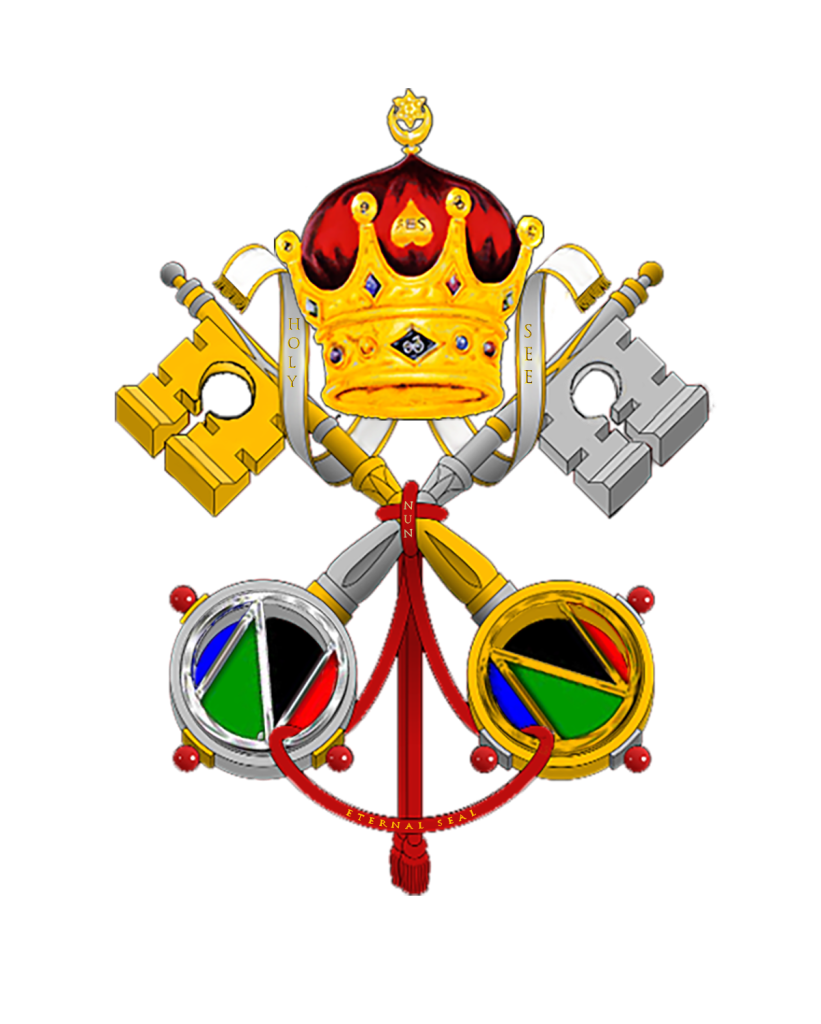
The Moorish Science Temple of America (MSTA), founded by Prophet Noble Drew Ali in 1913, has long served as a beacon for African Americans seeking spiritual and national identity. Ali taught that African Americans are descendants of the Moabites and thus are “Moorish” by nationality and Islamic by faith. However, following Ali’s death in 1929, the movement faced challenges related to leadership succession, leading to the emergence of various factions.
In response to these challenges, His Imperial Majesty Dr. Lawiy Zodok established the Chaplaincy for Moorish Science Temple Branch Temple #24. This institution functions analogously to the papacy in the Catholic Church, serving as a centralized authority to ensure global doctrinal unity and continuity of global suzerainty within the Moorish Science Temple. Due to misfortune and misguidance, the corporate sole of Noble Drew Ali has been left without a central apostolic succession and temporal authority. In the event of these inherited consequences and legal circumstances. The Chaplaincy operates as a corporate sole, a legal entity allowing for seamless succession of leadership, ensuring that the office and its responsibilities persist beyond the lifespan of any individual holder.
The Chaplaincy’s establishment is secured by the legal framework of the House of Shamuel the Grantor with Larry Shelton Estate Trust as trustee, operating as Shelton Estate & Co. Family Office. This structure of the Holy Crown estate (Noble Drew Ali) of the World Temple Branch Temple No. #24 of the Moorish Science Temple, stands on the foundational principles laid by Prophet Noble Drew Ali. Ali is regarded as the Crown Estate and Corporate Sole of the Moorish Science Temple of America, symbolizing the enduring legacy and authority of the Prophet within the organization.
A corporation sole is a legal entity consisting of a single (“sole”) incorporated office, occupied by a single (“sole”) natural person. This structure allows corporations (often religious corporations or Commonwealth governments) to pass without interruption from one office holder to the next, giving positions legal continuity with subsequent office holders having identical powers and possessions to their predecessors. A corporation sole is one of two types of corporation, the other being a corporation aggregate. The concept of corporation sole originated as a means for orderly transfer of ecclesiastical property, serving to keep the title within the denomination or religious society. In order to keep the religious property from being treated as the estate of the vicar of the church, the property was titled to the office of the corporation sole. In the case of the Catholic Church, ecclesiastical property is usually titled to the diocesan bishop, who serves in the office of the corporation sole. The Chaplaincy is ancient guild structure that was known in Roman times. Known as collegium, collegia or corpus, these were organised groups of merchants who specialised in a particular craft and whose membership of the group was voluntary. The ancient collegia also included fraternities of priests overseeing sacrifices, practicing augury, keeping religious texts, arranging festivals, and maintaining specific religious cults.
Most corporations sole are church-related (for example, the archbishopric of Canterbury), although some political offices of the United Kingdom (e.g., many of the secretaries of state), Canada, and the United States are corporations sole. As a corporation sole, the legal person of the sovereign is the personification of the state and consequently acts as a guarantor of the rule of law and the fount of all executive authority behind the state’s institutions.
Some nations, including the United States and the United Kingdom, have chaplains appointed to work with parliamentary bodies, such as the Chaplain of the United States Senate, the Chaplain of the United States House of Representatives, and Chaplain to the Speaker of the House of Commons. In addition to opening proceedings with prayer, these chaplains provide pastoral counseling to congressional members, their staffs, and their families; coordinate the scheduling of guest chaplains, who offer opening prayers; arrange and sometimes conduct marriages, memorial services, and funeral services for congress, staff, and their families; and conduct or coordinate religious services, study groups, prayer meetings, holiday programs, and religious education programs, as well. Chaplaincy is a very specialized ministry where the minister serves not in a church nor “para-church” ministry, but in an institutional setting. The chaplain ministers not to a congregation, but to the public at-large which is called the Holy Audience of the World Congregation.
The sovereign’s status as a corporation sole ensures that all references to the king, the queen, His Majesty, Her Majesty, and the Crown are synonymous, referring to exactly the same legal personality over time. While natural persons who serve as sovereign pass on, the sovereign never legally dies; thus the corporate nature of the office of sovereign ensures that the authority of the state continues uninterrupted. In other words, the sovereign is made a corporation sole to prevent the possibility of disruption or interregnum, thereby preserving the stability of the Crown (state). For this reason, at the moment of the demise of the sovereign, a successor is immediately and automatically in place. Monarchs have held private religious services as a long-standing right along with a privilege of appointing their own chaplains to serve them and their families. Since the late medieval period, dukes and lesser ranking nobles have had a capacity to name a number of chaplains. The question of who has authority to qualify chaplains was the heart of the Investiture Controversy in medieval Germany.
In many constitutional monarchies, such as the Commonwealth realms, the Crown functions as a corporation sole. This legal entity allows the monarch to operate in both official and personal capacities, though legally, the office and the individual are inseparable. This means there is no legal distinction between the office and the person holding it. The Crown, as a legal person, can enter into contracts and own property. The monarch may also hold private properties distinct from those held in an official capacity and can act separately in personal matters. For example, King Charles III holds several distinct offices, such as King of the United Kingdom, King of Canada, King of Australia, and Supreme Governor of the Church of England. Each of these roles is a separate corporation sole, even as he maintains his private capacities. Similarly, the office of prime minister includes certain properties and privileges, like an official residence and decision-making powers, that remain with the office after the office holder’s departure, separate from any private property they may own.
One of the pivotal roles of the Chaplaincy is to address the historical and legal challenges faced by African Americans, particularly concerning their national identity. Prophet Noble Drew Ali extended a form of manumission for African Americans, asserting that they are Moors and indigenous people, thereby challenging the narratives that have historically marginalized them. This perspective seeks to rectify the implications of cases like Dred Scott and subsequent amendments that have perpetuated second-class citizenship for African Americans.
Within the Moorish Science Temple, adepts serve as acolytes of Noble Drew Ali, akin to the clergy in other religious traditions. Notably, Ali did not establish a legal formal line of succession beyond the adepts, who comprised the original council supporting his mission. Today, the Prophet is revered as World Professor and savior to Moorish Americans. The absence of a centralized apostolic succession has posed challenges to the cohesion and growth of the movement. The Chaplaincy aims to address this by establishing an institutional office for apostolic succession within the Moorish Science Temple. A chaplain is, traditionally, a cleric (such as a minister, priest, pastor, rabbi, purohit, or imam), or a lay representative of a religious tradition, attached to a secular institution (such as a hospital, prison, military unit, intelligence agency, embassy, school, labor union, business, police department, fire department, university, sports club), or a private chapel. The term chaplaincy refers to the World Temple as the Holy Chapel, the Moorish Parliament facility and or department(s) in which one or more chaplains carry out their role.
Many monarchies and major noble houses had, or still have, several domestic or private chaplains as part of their Ecclesiastical Household, either following them or attached to a castle or other residence. The chaplain was freed from any obligation to reside in a particular place so could travel with the family, internationally if necessary, and minister to their spiritual needs. Further, the family could appoint a chaplain who reflected their own doctrinal views. Domestic chaplains performed family christenings, funerals and weddings and were able to conduct services in the family’s private chapel, excusing the nobility from attending public worship. Chaplaincy describes any ministry (ordained or not) that tends to the spiritual and religious needs of a certain place or population. Some chaplaincy roles are interfaith, meaning they are trained to provide spiritual care to people of various religious backgrounds.
The mission of the Chaplaincy extends beyond spiritual leadership; it seeks to establish a global body of chaplains composed of Grand Sheiks, Sheiks, and appointed adepts from various branch temples. Under the leadership of H.I.M. Dr. Lawiy Zodok, as an adept & Grand Sheik, the Chaplaincy functions as a foedus operum trust and a corporate sole, for facilitating in both private and public legal capacities, conducting commerce for the global civilians and subjects of Moorish Science Temple of America, and making & enforcing laws & customs of the globally charted Temple. The charter granted to Dr. Zodok as a Grand Sheik for the World Temple has been entrusted him within this framework, providing a legal personhood that can serve as a legal & financial vehicle for the Moorish Science Temple.
The Chaplaincy also emphasizes the importance of the Moorish Science Temple’s status as a sovereign theocratic government. Prophet Noble Drew Ali recorded a religious trust document on behalf of the Moorish Science Temple in Cook County, Illinois, establishing it as a 508 trust institution with its own laws and customs. The Chaplaincy has expanded this jurisdiction globally through a corporate sole trust, benefiting Moorish civilians and subjects worldwide. In feudal times most laymen, and for centuries even most noblemen, were poorly educated and the chaplain would also be an important source of scholarship in the household, tutoring children and providing counsel to the family on matters broader than religion. Before the advent of the legal profession, modern bureaucracy and civil service, the literate clergy were often employed as secretarial staff, as in a chancery. Hence the term clerk, derived from Latin clericus (clergyman). This made them very influential in temporal affairs. There was also a moral impact since they heard the confessions of the elite.
The Chaplaincy is lead by the World Chaplain as the General Solutionist who acts as the chancellor of The Holy Guard (Army of God), and global military for the global citizens which is the principal record-keeper of a diocese or eparchy, or their equivalent. The chancellor is a notary, so that he or she may certify official documents, and often has other duties at the discretion of the bishop of the diocese: he or she may be in charge of some aspect of finances or of managing the personnel connected with diocesan offices, although his delegated authority cannot extend to vicars of the diocesan bishop, such as vicars general, episcopal vicars or judicial vicars. His office is within the “chancery“. Vice-chancellors may be appointed to assist the chancellor in busy chanceries. Normally, the chancellor is a chaplain, priest, or deacon, although in some circumstances a layperson may be appointed to the post. In the eparchial curia a chancellor is to be appointed who is to be a presbyter (priest) or deacon and whose principal obligation, unless otherwise established by the particular law, is to see that the acts of the curia are gathered and arranged as well as preserved in the archives of the eparchial curia.
The head of the Chaplaincy is called of the Chancellor of the World Chaplaincy (Latin: cancellarius) which is a title of various official positions in the governments of many countries. The original chancellors were the cancellarii of Roman courts of justice or ushers, who sat at the cancelli (lattice work screens) of a basilica (court hall), which separated the judge and counsel from the audience. A chancellor’s office is called a chancellery or chancery. The word is now used in the titles of many various officers in various settings (government, education, religion). Nowadays the term is most often used to describe:
- The head of the government
- A person in charge of foreign affairs
- A person with duties related to justice
- A person in charge of financial and economic issues
- The head of a university
In collaboration with UNESCO, the Chaplaincy has instituted a global citizens curriculum within the Moorish Science Temple, promoting education and cultural awareness. Recognized as a global ambassador, the Chaplaincy’s mission includes establishing a central apostolic succession for the Prophet and forming a Moorish Parliament to engage in governmental affairs on an international scale. Operating under the Holy See Global District, the Chaplaincy maintains its headquarters in Chicago’s Unity Hall, considered the Mecca for Moorish Americans. This city-state functions as a geographical enclave within the United States, established by the Treaty of Peace and Friendship between Morocco and the United States, ensuring the protection and temporal and spiritual independence of Moors.
The domestic chaplain was an important part of the life of the peerage in England from the reign of Henry VIII to the middle of the 19th century. Up until 1840, Anglican domestic chaplains were regulated by law and enjoyed the substantial financial advantage of being able to purchase a license to hold two benefices simultaneously while residing in neither. The Chaplaincy’s efforts to unify the Moorish Science Temple under a centralized authority aim to strengthen the movement’s impact and ensure the preservation of Prophet Noble Drew Ali’s teachings for future generations.
The concept of spiritual guidance is deeply rooted in human history, with various cultures recognizing and venerating individuals who serve as intermediaries between the divine and the community. These figures have been known by many titles, such as “Hadi” in Arabic, “Hudah” in Hebrew, “shamans” in indigenous cultures, and “chaplains” in contemporary settings. The role of the chaplain, in particular, offers a fascinating evolution of spiritual guidance that transcends time and tradition. Their titles such as “spiritual directors” in ecclesiastical contexts, have been instrumental in guiding individuals and communities on their spiritual journeys.
Etymology and Origins of ‘Chaplain’
The term “chaplain” has a rich historical background. It originates from the Latin word cappellanus, which referred to the custodian of St. Martin’s cloak (cappella). St. Martin of Tours, a 4th-century bishop, was known for his act of charity in dividing his cloak to share with a beggar. This cloak became a revered relic, and the guardians of the cloak were termed cappellani, a term that evolved into “chaplain” in English.
Historical Evolution of Chaplaincy
Initially, chaplains were closely associated with Christian traditions, serving in royal courts, military units, and hospitals. Their primary role was to provide religious services, sacraments, and spiritual counsel to those who might not have regular access to church facilities. Over the centuries, the scope of chaplaincy expanded beyond Christian contexts. Today, chaplains represent various faiths and serve in diverse settings, including educational institutions, prisons, healthcare facilities, and even corporate environments. In religious schools the role of the chaplain tends to be educational and liturgical.
Chaplains as Modern Spiritual Guides
In contemporary society, chaplains continue the timeless tradition of spiritual guidance. They offer support during critical life events, provide ethical counsel, and facilitate religious or spiritual practices. Their presence is especially significant in pluralistic societies where individuals from various backgrounds seek meaning, comfort, and guidance. Chaplains are trained to navigate complex emotional and spiritual landscapes, ensuring that care is inclusive and respectful of individual beliefs.
The Timeless Role of Spiritual Guides
Throughout history, spiritual guides, regardless of their titles, have played essential roles in their communities:
- Mediators: They bridge the gap between the sacred and the secular, interpreting divine messages and rituals for the community.
- Healers: Beyond spiritual healing, they often address physical and psychological ailments, recognizing the interconnectedness of body, mind, and spirit.
- Educators: They pass down sacred knowledge, traditions, and ethical teachings, ensuring cultural and spiritual continuity.
- Counselors: In times of crisis or uncertainty, they provide guidance, support, and a listening ear, helping individuals navigate life’s challenges.
Etymology and Significance of “Hadi” and “Hudah”
The term “Hadi” (Arabic: هادي) is derived from the Arabic root “hada,” meaning “to guide.” In Islamic tradition, “Al-Hadi” is one of the 99 names of Allah, signifying “The Guide” who leads believers towards righteousness. Similarly, “Hudah” in Hebrew carries the connotation of guidance, reflecting a shared linguistic emphasis on the importance of spiritual direction.
Roles of Spiritual Guides Across Cultures
- Indigenous Traditions: In many indigenous cultures, shamans serve as healers and spiritual guides, acting as intermediaries between the physical world and the spiritual realm. They perform rituals, offer healing, and provide guidance based on ancestral wisdom.
- Mayan Culture: For thousands of years, spiritual guides have been integral to Mayan society, preserving spiritual practices and guiding communities through rituals and ceremonies.
- Contemporary Spiritual Direction: In modern contexts, spiritual directors offer guidance to individuals seeking deeper spiritual understanding, helping them navigate their faith journeys and personal growth
Conclusion
The role of the chaplain exemplifies the enduring nature of spiritual guidance across cultures and eras. From ancient shamans to modern chaplains, these figures have adapted to the evolving needs of their communities, ensuring that the quest for meaning, connection, and solace remains a fundamental aspect of the human experience. The corporation sole form can serve the needs of a religious organization by reducing its complexity to that of a single office and its holder, thereby eliminating the need for by-laws and a board of directors.
