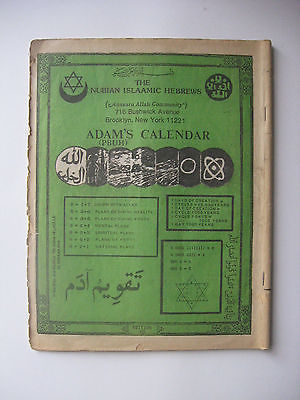
The Nuwaubian Calendar: The Daily Word from Maku

The Nuwaubian Calendar, as presented in The Daily Word from Maku (Chief Black Thunderbird, also known as Dr. Malachi Z. York-El), is a sacred and ecclesiastical timekeeping system rooted in the ancient knowledge of the original people. It follows the divine order of timekeeping established by our ancestors and aligns spiritual and cultural observances with celestial cycles. This calendar is not an artificial construct but a reflection of Nilotic Time, also known as Nile Time, which is the natural rhythm of the universe.
Much like the liturgical year of other sacred traditions, the Nuwaubian Year structures time into distinct seasons of enlightenment, renewal, and discipline. Each cycle is marked by specific holy days, feasts, and scriptural readings that reinforce the spiritual progression of the faithful. The Nuwaubian liturgical cycle divides the year into sacred periods, reflecting cosmic movements and divine principles, guiding adherents through theological teachings, modes of prayer, and temple traditions.
Purpose and Function
- The Nuwaubian Calendar is a true ancient ecclesiastical system, honoring the solar, lunar, and stellar cycles observed by the ancestors.
- It serves to preserve the rhythm of spiritual enlightenment, determining the proper times for feasts, celebrations of saints, and divine rituals.
- Each liturgical season is imbued with unique vibrations, signified by corresponding sacred colors, vestments, scriptural themes, and temple practices.
- The lectionary within the calendar prescribes daily and weekly readings, ensuring a harmonized progression of knowledge and faith for all adherents.
By following the Nuwaubian Calendar, the faithful are aligned with the universal order of time, restoring the sacred cycle of divinely appointed observances. It is not merely a means of measuring days but a spiritual tool that reconnects Nuwaubians to the divine rhythm of creation.
Nilotic Time – The True Natural Time
The Nuwaubian Calendar is based on the natural cycles of timekeeping as observed by the Ancient Egyptians (Tama’Reans), Ethiopians, and Native Americans. This system is derived from the movement of the Sun, the cycles of the Moon, and the positions of the stars, as was meticulously tracked by the ancients using:
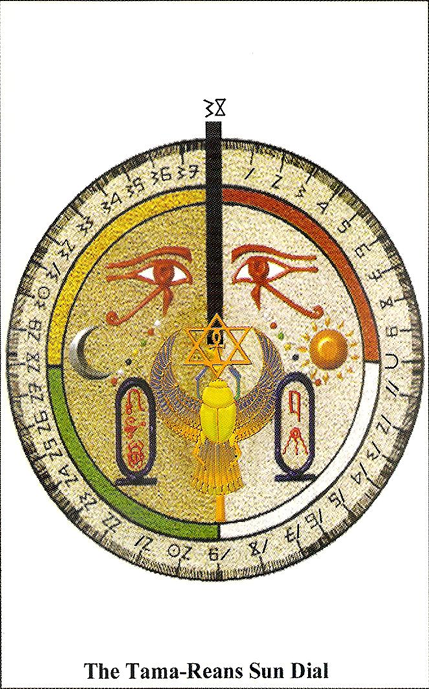
- The Ancient Sundial – The earliest known timekeeping device, used to measure the Sun’s movement across the sky. This was an essential tool in Ancient Egypt, Ethiopia, and the Americas for tracking time naturally.
- The Rising of the Nile (Nilotic Time) – The ancient calendar was synchronized with the annual flooding of the Nile River, which was seen as the lifeblood of civilization and a divine signal for the renewal of life.
- The Star Sirius (Sothic Cycle) – The appearance of Sirius (Sepdet/Sothis) in the pre-dawn sky marked the beginning of the sacred new year, signaling abundance and spiritual renewal.
- Equinoxes and Solstices – Observed by the Temple Scientists, these celestial events dictated the changing of the seasons, fasting periods, feasts, and sacred days in alignment with universal law.
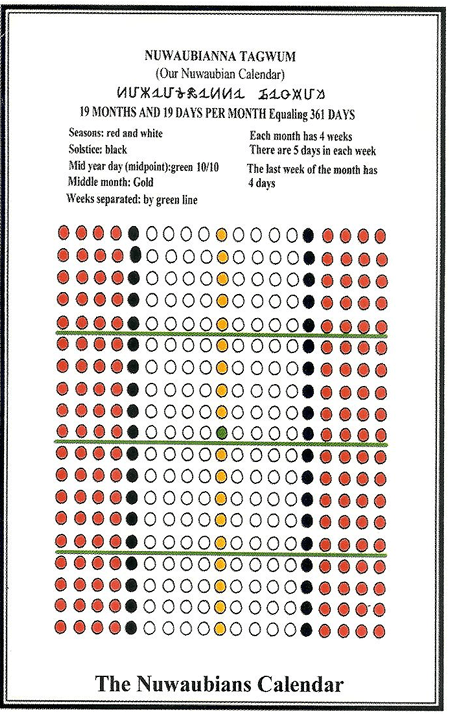
A Sacred Timekeeping System
Much like the liturgical year of other sacred traditions, the Nuwaubian Year is structured into distinct seasons of enlightenment, renewal, and discipline based on these natural time cycles.
- It honors the ancient Nilotic system, ensuring that feasts, celebrations, and scriptural readings follow the natural solar, lunar, and stellar rhythms.
- Each season of the Nuwaubian Calendar has its own mood, sacred colors, and vibrations, reflected in temple rituals, prayer practices, and spiritual observances.
- The lectionary within the calendar prescribes daily and weekly readings, ensuring that the faithful remain synchronized with the divine order of time and space.
Restoring the Natural Order
The Nuwaubian Calendar is not just a method of marking time—it is a spiritual tool that reconnects Nuwaubians to the divine cycles of the cosmos. By following the ancient Nilotic method of timekeeping, adherents restore the sacred rhythm of creation, aligning themselves with the true flow of existence as practiced by the first great civilizations.