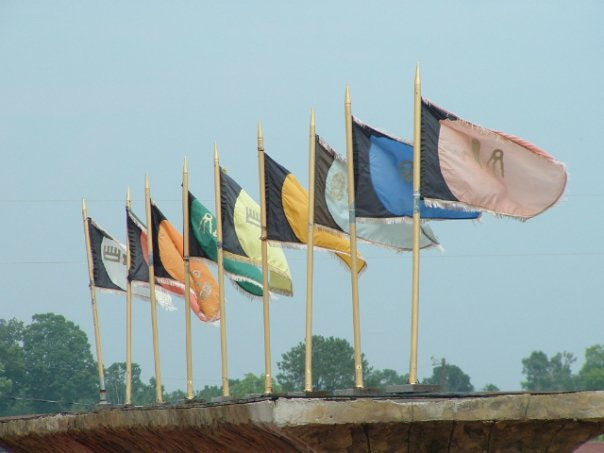
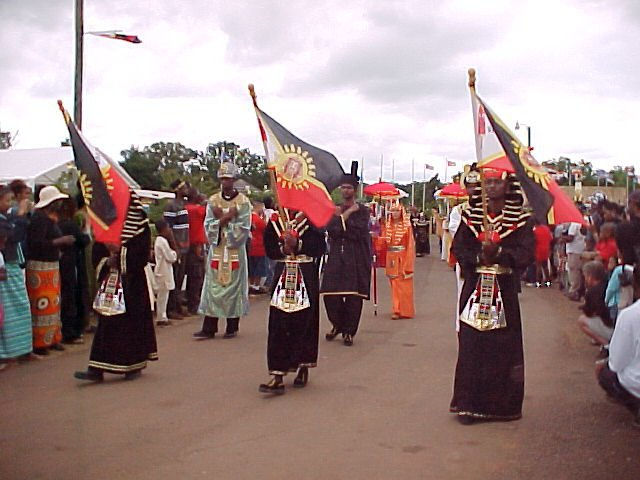
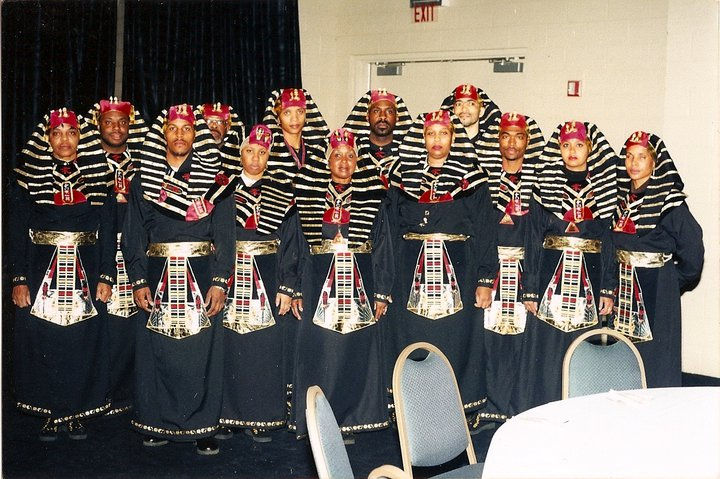
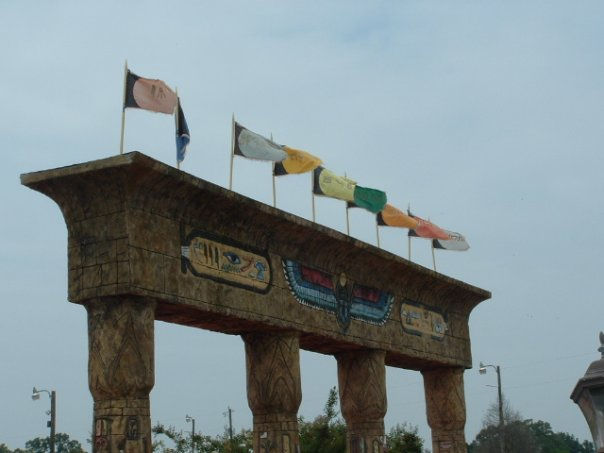
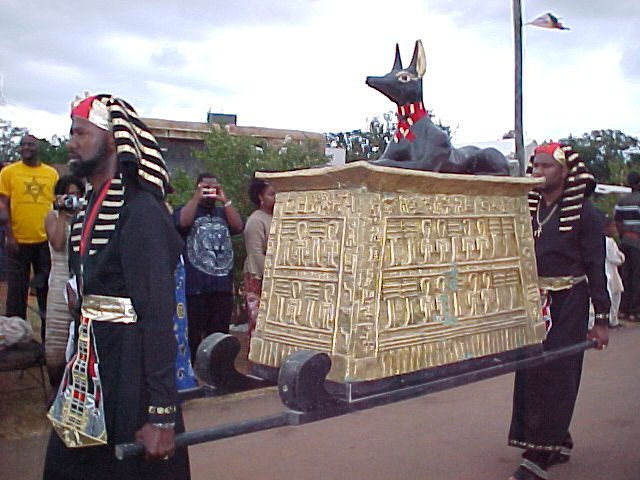
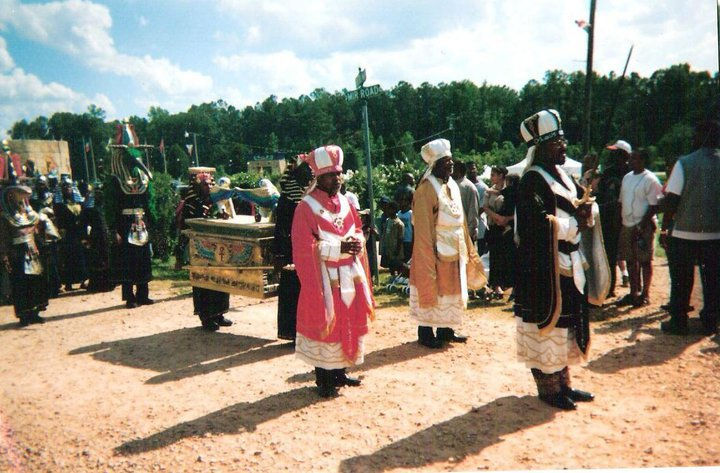
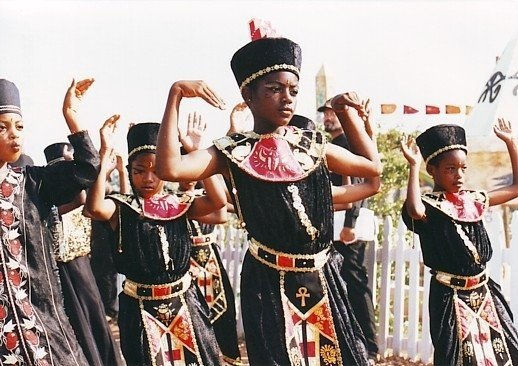
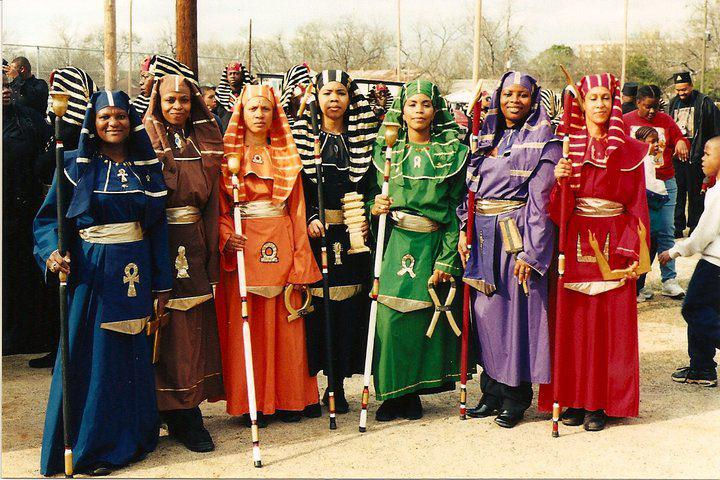
The HolyRoyal Family Orderof Anu or HolyRoyal Family Decorations of Shemesh is a decoration conferred by the head of the Holy Royal Family of Shamuel to their male & female relations. Such a decoration is considered more of a personal memento than a state decoration, although it may be worn during official state occasions. An ecclesiastical decoration is an order or a decoration conferred by a head of a church. A fraternal order or sorority is a voluntary membership group organised as an order, with an initiation ritual and traits alluding to religious, chivalric or pseudo-chivalric orders, guilds, or secret societies. Fraternal orders typically have secular purposes, serving as social clubs, cultural organizations and providing a form of social welfare through reciprocal aid or charitable work. Many friendly societies, benefit societies and mutual organisations take the form of a fraternal order.
European guilds imposed long standardized periods of apprenticeship, and made it difficult for those lacking the capital to set up for themselves or without the approval of their peers to gain access to materials or knowledge, or to sell into certain markets, an area that equally dominated the guilds’ concerns. These are defining characteristics of mercantilism in economics, which dominated most European thinking about political economy until the rise of classical economics. Not all city economies were controlled by guilds; some cities were “free.” Where guilds were in control, they shaped labor, production and trade; they had strong controls over instructional capital, and the modern concepts of a lifetime progression of apprentice to craftsman, and then from journeyman eventually to widely recognized master and grandmaster began to emerge. In order to become a master, a journeyman would have to go on a three-year voyage called journeyman years. The practice of the journeyman years still exists in Germany and France. Fraternal societies are often divided geographically into units called lodges or provinces. They sometimes involve a system of awards, medals, decorations.
Also styles, degrees, offices, orders, or other distinctions, often associated with regalia, insignia, initiation and other rituals, secret greetings, signs, passwords, oaths, and more or less elaborate symbolism, as in chivalric orders. An order of chivalry, order of knighthood, chivalric order, or equestrian order is an order of knights, typically founded during or inspired by the original Catholic military orders of the Crusades (c. 1099–1291) and paired with medieval concepts of ideals of chivalry. A knight is a person granted an honorary title of knighthood by a head of state(including the pope) or representative for service to the monarch, the church or the country, especially in a military capacity. The term militant (Latin: militans) has a primary meaning of “being a soldier, performing military service“, but it acquired a secondary meaning of “serving, performing service, laboring”, with its root milito coming to mean “soldier of Christ or God” in Medieval Latin usage. According to the three states of the Church. The members of the Church Militant, i.e. those Christians on earth, are engaged in spiritual warfare against sin in order that, when they die, they might enter heaven and join the Church Triumphant. Failing that directly, those who believe in the existence of Purgatory hope to die in a state of grace and join the Church Penitent, to purify themselves of their imperfections and, ultimately, join the Church Triumphant. Similar to true jihadist. As the Holy Seed Baptist Synagogue we are Nazarian Knights of the Tents of Kedar. And and as an Ansaaruallah Community we are Shriners of the Holy Shrine of Al Mahdhi.
Since the 15th century, orders of chivalry, often as dynastic orders, began to be established in a more courtly fashion than could be created ad hoc. These orders would often retain the notion of being a confraternity, society or other association of members, but some of them were ultimately purely honorific and consisted of a medal decoration. In fact, these decorations themselves often came to be known informally as orders. These institutions in turn gave rise to the modern-day orders of merit of sovereign states. A military order (Latin: militaris ordo) is a religious society of knights. The original military orders were the Knights Templar, the Knights Hospitaller, the Order of the Holy Sepulchre, the Order of Saint James, the Order of Calatrava, and the Teutonic Knights. They arose in the Middle Ages in association with the Crusades, in the Holy Land, the Baltics, and the Iberian peninsula; their members being dedicated to the protection of pilgrims and Christians, as well as the defence of the Crusader states. They are the predecessors of chivalric orders.
Most members of military orders were laymen who took religious vows, such as of poverty, chastity, and obedience, according to monastic ideals. The orders owned houses called commanderies all across Europe and had a hierarchical structure of leadership with the grand master at the top. The Knights Templar, the largest and most influential of the military orders, was suppressed in the early fourteenth century; only a handful of orders were established and recognized afterwards. However, some persisted longer in their original functions, such as the Sovereign Military Order of Malta and the Order of Saint John, the respective Catholic and Protestant successors of the Knights Hospitaller, alongside the Order of the Holy Sepulchre, which remains active under the Pope’s sovereignty. Those military orders that survive today have evolved into purely honorific or ceremonial orders or else into charitable foundations.
A dynastic order, monarchical order, or house order is an honorific distinction under royal patronage. This type of order is bestowed by a reigning sovereign or by the head of a formerly ruling family, recognized as a legitimate source of honors (fons honorum). These orders are often considered an integral part of the cultural and historical heritage of the ruling family. Traditionally, dynastic orders were created or maintained to reward services rendered to a monarch or their dynasty, thereby strengthening bonds of loyalty and allegiance to the crown.
In parallel, there are national or state orders, which are similar distinctions (such as orders of merit) conferred by sovereign states but not under the authority of a ruling dynasty. These national orders are typically awarded by governments or republican institutions to honor exceptional contributions to the nation, whether in the fields of politics, culture, science, or society.
While dynastic orders are deeply rooted in monarchical history and traditions, national orders reflect the values and priorities of a modern state. These two types of distinctions often coexist, illustrating the diversity of honorific systems around the world. The guild was made up by experienced and confirmed experts in their field of handicraft. They were called master craftsmen. Before a new employee could rise to the level of mastery, he had to go through a schooling period during which he was first called an apprenticeship. After this period he could rise to the level of journeyman. Apprentices would typically not learn more than the most basic techniques until they were trusted by their peers to keep the guild’s or company’s secrets.
Journeymen were able to work for other masters, unlike apprentices, and generally paid by the day and were thus day labourers. After being employed by a master for several years, and after producing a qualifying piece of work, the apprentice was granted the rank of journeyman and was given documents (letters or certificates from his or her master and / or the guild itself) which certified him as a journeyman and entitled him to travel to other towns and countries to learn the art from other masters. These journeys could span large parts of Africa, Asia, and Europe and were an unofficial way of communicating new methods and techniques, though by no means all journeymen made such travels — they were most common in Germany and Italy, and in other countries journeymen from small cities would often visit the capital.
After this journey and several years of experience, a journeyman could be received as master craftsman, though in some guilds this step could be made straight from apprentice. This would typically require the approval of all masters of a guild, a donation of money and other goods (often omitted for sons of existing members), and the production of a so-called “masterpiece“, which would illustrate the abilities of the aspiring master craftsman; this was often retained by the guild.
The medieval guild was established by charters or letters patent or similar authority by the city or the ruler and normally held a monopoly on trade in its craft within the city in which it operated: handicraft workers were forbidden by law to run any business if they were not members of a guild, and only masters were allowed to be members of a guild. Before these privileges were legislated, these groups of handicraft workers were simply called ‘handicraft associations’.
The N.E.O Apprenticeship is a system for training a new generation of practitioners of a trade or profession with on-the-job training and often some accompanying study (classroom work and reading). Apprenticeships may also enable practitioners to gain a license to practice in a regulated occupation. Most of their training is done while working for an employer who helps the apprentices learn their trade or profession, in exchange for their continued labor for an agreed period after they have achieved measurable competencies.
The system of modern apprenticeship first developed in the Late Middle Ages and came to be supervised by craft guilds and town governments. A master craftsman was entitled to employ young people as an inexpensive form of labour in exchange for providing food, lodging and formal training in the craft.
Most apprentices were males, but female apprentices were found in crafts such as seamstress, tailor, cordwainer, & baker and stationer.
Apprentices usually began at ten to fifteen years of age, and would live in the master craftsman’s household. The contract between the craftsman, the apprentice and, generally, the apprentice’s parents would often be governed by an indenture. Most apprentices aspired to becoming master craftsmen themselves on completion of their contract (usually a term of seven years), but some would spend time as a journeyman and a significant proportion would never acquire their own workshop. In Coventry those completing seven-year apprenticeships with stuff merchants were entitled to become freemen of the city.
Apprenticeship was adopted from the military of the West African kingdom of Dahomey. Soldiers in the army were recruited as young as seven or eight years old, as they initially served as shield carriers for regular soldiers. After years of apprenticeship and military experience, the recruits were allowed to join the army as regular soldiers. With a combination of lifelong military experience and monetary incentives, a cohesive and well-disciplined military emerged in Dahomey.
Electricians are often trained through apprenticeships.
Apprenticeship lengths vary significantly across sectors, professions, roles and cultures. In some cases, people who successfully complete an apprenticeship can reach the “journeyman” or professional certification level of competence. In other cases, they can be offered a permanent job at the company that provided the placement. Although the formal boundaries and terminology of the apprentice / journeyman / master system often do not extend outside guilds and trade unions, the concept of on-the-job training leading to competence over a period of years is found in any field of skilled labor.
Each parampara belongs to a specific sampradaya, and may have its own gurukulas for teaching, which might be based at akharas, gompas, mathas, viharas & or temples. It is the tradition of spiritual relationship and mentoring where teachings are transmitted from a guru, teacher, (Sanskrit: गुरु) or lama, to a śiṣya (Sanskrit: शिष्य, disciple), shramana (seeker), or chela (follower), after the formal diksha (initiation).
Also musical, arts or martial arts, is imparted through the developing relationship between the guru and the disciple.
According to the Business Dictionary, a mentor is a senior or more experienced person who is assigned to function as an advisor, counsellor, or guide to a junior or trainee. The mentor is responsible for offering help and feedback to the person under their supervision. A mentor’s role, according to this definition, is to use their experience to help a junior employee by supporting them in their work and career, providing comments on their work, and, most crucially, offering direction to mentees as they work through problems and circumstances at work.
Mentorship is the patronage, influence, guidance, or direction given by a mentor. A mentor is someone who teaches or gives help and advice to a less experienced and often younger person. In an organizational setting, a mentor influences the personal and professional growth of a mentee. Most traditional mentorships involve having senior employees mentor more junior employees, but mentors do not necessarily have to be more senior than the people they mentor. What matters is that mentors have experience that others can learn from.
It is considered that this relationship, based on the genuineness of the guru and the respect, commitment, devotion and obedience of the student, is the best way for subtle or advanced knowledge to be conveyed. The student eventually masters the knowledge that the guru embodies. The person receiving mentorship may be referred to as a protégé (male), a protégée (female), an apprentice, a learner or, in the 2000s, a mentee. Mentoring is a process that always involves communication and is relationship-based, but its precise definition is elusive.
Freemasonry (sometimes spelled Free-Masonry) or simply Templist Masonry to the New Ethiopian Order which includes various fraternal & sorority organisations that trace their origins to the local guilds of stonemasons that, from the end of the 14th century, regulated the qualifications of stonemasons and their interaction with authorities and clients. Freemasonry is the oldest fraternity in the world and among the oldest still continued organizations in history. Modern Freemasonry broadly consists of three main traditions: Conservative Freemasonry (also called “Regular Freemasonry” by its adherents), which insists that a “volume of sacred law“, such as the Bible, the Quran, or other religious scripture be open in a working lodge, that every member professes belief in a Supreme Being, that only men be admitted, and that discussion of religion or politics does not take place within the lodge; Liberal Freemasonry (sometimes called Continental Freemasonry), which has continued to evolve beyond these restrictions, particularly regarding religious belief and political discussion; and Women’s and Mixed-Gender Freemasonry (Co-Freemasonry), which includes organizations that either admit women exclusively (such as the Order of Women Freemasons and The Honourable Fraternity of Ancient Masons in the UK) or accept both men and women (such as Le Droit Humain). All three traditions have evolved over time from their original forms—Conservative Freemasonry has moved from requiring specifically Christian membership with only the Bible on the altar to its current form, while Liberal Freemasonry continued evolving in different directions, particularly regarding religious requirements. Recent decades have seen further changes in Conservative Freemasonry, including shifting perspectives on shared jurisdictions and formal acknowledgment of women’s Masonic organizations. Each of these traditions maintains its own philosophical approach to Masonic principles. The Liberal and Women’s Masonic bodies are not officially recognized by Conservative Freemasonry but operate independently, often following the same Masonic rules, regulations, rituals and traditions (sometimes sharing buildings, such as Freemasons’ Hall in London). A Masonic Temple Lodge or Masonic Hall is, within Freemasonry, the room or edifice where a Masonic Lodge meets. Masonic Temple Lodges may also refer to an abstract spiritual goal and the conceptual ritualistic space of a meeting including virtual spaces as used by cryptic or cyber masons.
Mentoring is a process for the informal transmission of knowledge, social capital, and the psychosocial support perceived by the recipient as relevant to work, career, or professional development; mentoring entails informal communication, usually face-to-face and during a sustained period of time, between a person who is perceived to have greater relevant knowledge, wisdom, or experience (the mentor) and a person who is perceived to have less (the protégé). The basic, local organisational unit of Freemasonry is the Lodge. These private Lodges are usually supervised at the regional level (usually coterminous with a state, province, or national border) by a Grand Lodge or Grand Orient. There is no international, worldwide Grand Lodge that supervises all of Freemasonry; until the Grand Lodge of Tiamaat. Prior to this each Grand Lodge operated independent, and they do not necessarily recognise each other as being legitimate. Lodges are found around the world and on all populated continents; however due to anti-Masonry and laws that effectively ban the tradition, it does not have a presence in every country. In the spirit of brotherhood and hopefulness, however, Freemasons usually presume that clandestine lodges may nonetheless exist in those countries in which it is banned, even if they may not actually exist.
The degrees of Freemasonry are the three grades of medieval craft guilds: Entered Apprentice, Journeyman or Fellow of the craft (now called either “Fellowcraft” or “Fellow Craft” in English speaking jurisdictions, and “Companion” in non-English speaking jurisdictions), and Master Mason. The candidate of these three degrees is progressively taught the meanings of the symbols of Freemasonry and entrusted with grips, signs, and words to signify to other members that he has been so initiated. The degrees are part allegorical morality play and part lecture. These three degrees form Craft (or Blue Lodge) Freemasonry, and members of any of these degrees are known as Free-Masons, Freemasons or Templist Masons to those under the New Ethiopian Order. Once the Craft degrees have been conferred upon a Mason, he or she is qualified to join various “Concordant bodies” which offer additional degrees. These organisations are usually administered separately from the Grand Lodges who administer the Craft degrees. The extra degrees vary with locality and jurisdiction. In addition to these bodies, there are further organizations outside of the more traditional Rites of Freemasonry, that require an individual to be a Master Mason before they can join (such as the Rosicrucian Society of England).
The Masonic lodge is the basic organisational unit of Freemasonry. The Lodge meets regularly and conducts the usual formal business of any small organisation (approve minutes, elect new members, appoint officers and take their reports, consider correspondence, bills and annual accounts, organise social and charitable events, etc.). In addition to such business, the meeting may perform a ceremony to confer a Masonic degree or receive a lecture, which is usually on some aspect of Masonic history or ritual. At the conclusion of the meeting, the Lodge may hold a formal dinner, or festive board, sometimes involving toasting and song. These meetings are typically held in a Masonic temple, though other venues may occasionally be used.
The bulk of Masonic ritual consists of degree ceremonies. Candidates for Freemasonry are progressively initiated into Freemasonry, first in the degree of Entered Apprentice. At some later time, in separate ceremonies, they will be passed to the degree of Fellowcraft; and then raised to the degree of Master Mason. In each of these ceremonies, the candidate must first take the new obligations of the degree, and is then entrusted with secret knowledge including passwords, signs and grips (secret handshakes) confined to his or her new rank. Although these symbols and gestures are nominally secret, they are readily found in public sources, including those published by Masonic organizations themselves.
Most Lodges have some sort of social functions, allowing members, their partners, and non-Masonic guests to meet openly. Often coupled with these events is the discharge of every Mason’s and Lodge’s collective obligation to contribute to charity. This occurs at many levels, including in annual dues, subscriptions, fundraising events, Lodges and Grand Lodges. Masons and their charities contribute for the relief of need in many fields, such as education, health and old age.
Private Lodges form the backbone of Freemasonry, with the sole right to elect their own candidates for initiation as Masons or admission as joining Masons, and sometimes with exclusive rights over residents local to their premises. There are non-local Lodges where Masons meet for wider or narrower purposes, such or in association with some hobby, sport, Masonic research, business, profession, regiment or college. The rank of Master Mason also entitles a Freemason to explore Masonry further through other degrees, administered separately from the basic Craft or “Blue Lodge” degrees described here, but generally having a similar structure and meetings.
There is much diversity and little consistency in Freemasonry because each Masonic jurisdiction is independent and sets its own rules and procedures while Grand Lodges have limited jurisdiction over their constituent member Lodges, which are ultimately private clubs. The wording of the ritual, the number of officers present, the layout of the meeting room, etc. varies from jurisdiction to jurisdiction. Each Masonic Lodge exists and operates according to ancient principles known as the Landmarks of Freemasonry, which elude any universally accepted definition. The oldest, the Regius poem, is unique in being set in verse. The rest, of which over a hundred survive, usually have a three part construction. They start with a prayer, invocation of God, or a general declaration, followed by a description of the Seven Liberal Arts(logic, grammar, rhetoric, arithmetic, geometry, music and astronomy), extolling Geometry above the others. There follows a history of the craft, and how it came to the British Isles, usually culminating in a general assembly of masons during the reign of King Athelstan. The last part consists of the charges or regulations of the lodge, and the craft of masonry in general, which the members are bound to maintain.
The Halliwell Manuscript, also known as the Regius Poem, is the earliest of the Old Charges. It consists of 64 vellum pages of Middle English written in rhyming couplets. In this, it differs from the prose of all the later charges. The poem begins by describing how Euclid “counterfeited geometry” and called it masonry, for the employment of the children of the nobility in Ancient Egypt. It then recounts the spread of the art of geometry in “divers lands.” The document relates how the craft of masonry was brought to England during the reign of King Athelstan (924–939). It tells how all the masons of the land came to the King for direction as to their own good governance, and how Athelstan, together with the nobility and landed gentry, forged the fifteen articles and fifteen points for their rule. This is followed by fifteen articles for the master concerning both moral behaviour (do not harbour thieves, do not take bribes, attend church regularly, etc.) and the operation of work on a building site (do not make your masons labour at night, teach apprentices properly, do not take on jobs that you cannot do, etc.). There are then fifteen points for craftsmen which follow a similar pattern.
The Moorish Rite which includes the Atlanean, Nubian, Ethiopian, Lumerian, Babylonian, Scottish, York, and Alexanderian Rites is a branch of Freemasonry that integrates the rich cultural and historical legacy of the Moors into Masonic traditions. It emphasizes principles such as brotherly love, equality, and harmony among individuals from diverse backgrounds. The religious order is the ancient and modern fellowships within the global villages with a distinctive high-religiosity lifestyle and clear profession of faith. Religious orders often trace their lineage from revered teachers, venerate their founders, and have a document describing their lifestyle called a rule of life. Such orders exist in many of the world’s religions.
Holy Family of Nations
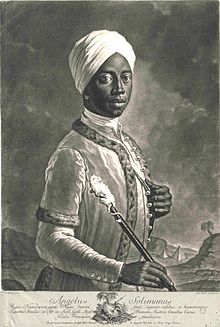
A notable figure associated with the Moorish Rite is Angelo Soliman, an 18th-century individual of African descent who made significant contributions to European Freemasonry. Soliman is recognized for his role in reforming Masonic rituals, emphasizing philosophical enlightenment and universal brotherhood, earning him the title “Father of Pure Masonic Thought.”
A hierophant is a holder and teacher of secret knowledge in the former sense their considered as mystics, while mysticism may be defined as an area of philosophical or religious thought focusing on mysteries in the latter sense. The Moorish Rite is a branch of Freemasonry that integrates Moorish heritage, Rites of Passage, and symbolism into Masonic traditions. It draws inspiration from the rich cultural and historical legacy of the Moors, aiming to promote principles of godly or brotherly love, equality, and harmony among individuals from diverse backgrounds.
In late neoplatonism, the spiritual universe is regarded as a series of emanations from the One. From the One emanated the Divine Mind (Nous) and in turn from the Divine Mind emanated the World Soul(Psyche) or the logos. Neoplatonists insisted that the One is absolutely transcendent and in the emanations nothing of the higher was lost or transmitted to the lower, which remained unchanged by the lower emanations. Historian Jasper Ridley says that Freemasonry is “the world’s most powerful secret Society”. The organization “Opus Dei” (Latin for “Work of God”) is portrayed as a “secret society” of the Catholic Church. Critics such as the Jesuit Wladimir Ledóchowski sometimes refer to Opus Dei as a Catholic (or Christian or “white”) form of Freemasonry. Theurgy means “divine working”. The first recorded use of the term is found in the mid-second-century neoplatonist work the Chaldean Oracles.
A notable figure associated with the Moorish Rite is Angelo Soliman, an 18th-century individual of African descent who made significant
The Moorish Rite encourages fraternity and sorority among people of varied backgrounds, sharing cultural, social, and moral interests with a primary focus on brotherly love, equality, and harmony. It engages members in lifelong educational, intellectual, and spiritual disciplines, highlighting paths to self-knowledge, self-discipline, and personal excellence.
Beyond its Masonic framework, the Moorish Rite along with the Atlanean, Nubian, Ethiopian, Lumerian, Babylonian, Scottish, York, and Alexanderian Rites under order of the Natural Ethereal Order functions as a sacred, religious, chivalric, militant, dynastic, fraternal, sororitas, royal order, as a collegium system of honor, guild & pledge system, and divine office, embodying spiritual practices that resonate with ancient traditions. This order seeks to harmonize the physical and spiritual realms, guiding adherents toward enlightenment and unity with the cosmic forces that govern the universe. The Catholic Church strongly opposed secret societies, especially the Freemasons. It did relent somewhat in the United States and allowed membership in labour unions and the Knights of Columbus, but not the Masons. Some Christian denominations continue to forbid their members from joining secret societies in the 21st century, such as the Allegheny Wesleyan Methodist Connection and Seventh-day Adventists.
The Moorish Rite also shares profound connections with other ancient liturgical traditions, such as the Ethiopian Rite. The Ethiopian Rite, part of the Alexandrian liturgical rites, is practiced by the Ethiopian Orthodox Tewahedo Church and the Eritrean Orthodox Tewahedo Church. It encompasses unique liturgical practices that reflect the rich spiritual heritage of these communities.
In the Holy Temples, it is the role of the Hierophant to “demystify” pledges. The term is sometimes used to refer to a person who guides people through religious sites, such as churches, and explains the various artifacts. This branch of theology is at times called mystagogy.
In the United States versions of mystagogical legends predate European contact. Early Native American tribes around the Great Lakes region, taught that the mystagogue was a spiritual leader, and upon death would transform into a beast with many heads. The mystagogue would reappear in his beastly form and feed on those who strayed from the tribe if it was not in keeping with their religious customs. Sufism for example first came into contact with the Judeo-Christian world during the Moorish occupation of Spain.
The historical tradition of the mystagogue has carried on today in one way through the fraternity system in American universities, that have historically held a position for a mystagogue at either the chapter or the national level. The mystagogue is a person of great respect, and his or her knowledge concerning both the physical and spiritual matters of the organization is not questioned. In a way similar to that of some Native American traditions, the mystagogue in the fraternity system has the power to shut down parts of the fraternity which are not in keeping with customs or tradition.
In summary, the Moorish Rite represents a unique fusion of Moorish heritage with Masonic principles, fostering a commitment to personal growth, cultural appreciation, and universal sister & brotherhood. Its connections to other ancient rites underscore a shared spiritual lineage that transcends time and geography, enriching the spiritual tapestry of its adherents.
Reason speaks! Nothing is of mine own individual self, for all powers come from on high and the divine and with the authority of Almighty Nature and the appointed elite and elect. We are rare vessels, “Significant Re-incarnates“, and tools to be used to accomplish this greatly sacred work. The worshipful masters and officers with the cooperation of our ancient indigenous Holy Royal Orders of the World Templist’s masonic fraternity and sorority and our paternity of Almighty Nature, the sacred craft will endeavor to duly assemble, organize and re-establish each adept Templist Minister their domain or house, and temple in strength as we each must be or become a pillar in our Sacred Order of Nature. We are sons of the sun ship.
A tariqah is how a religious order is described in Sufism. It especially refers to the mystical teaching and spiritual practices of such an order with the aim of seeking ḥaqīqah “ultimate truth”. Such tariqas typically have a hadi (guide) who plays the role of leader or spiritual director. Members and followers of a tariqa, meaning “desirous”, or “desiring the knowledge of knowing God and loving God” (also called a faqīr فقير). Tariqas have silsilas (Arabic: سلسلة) which is the spiritual lineage of the Shaikhs of that order. Almost all orders trace their silsila back to the Islamic prophet Muhammad. Tariqas are spread all over the Muslim world.
Honorable Kinfolk, True brothers and sisters of the Moorish Science Temple of America, Africa, Asia, and all world islands we must act and do now! This enactment as Entered Apprentice to fulfill our fulfillment of fellowship as Fellow Crafts of the Adept Chamber those solemn obligations taken up by the El’s and Bey’s with all their will’s and ways. Willing to be tried, and never denied, withstanding to be tried again and again with our own creative wills and accord to be found worthy and well qualified duly and truly prepared as we were first tiled having prepared in our hearts a secret chamber. My beloved kinfolk of our own creative wills and accord we all have taken our oaths and obligations promised and vowed in the presence of Almighty Nature. Seek the truth for it is the only key!
Apprentice Notice
I have devoted my visit to this planet to the resurrection of the mentally dead, which I affectionately refer to as mummies. Never did I know that the evil one had done such a great job with these people both mentally and physically as to have them hate self and kind. My greatest dilemma and hindrance has been the black devil, born amongst you, and by you, married to you, socializing with you, praying in the same sacred houses of worship as you; but secretly they have a spiritual pact with the devil, which makes it near impossible for them to totally surrender to the true word. Their very nature won’t let them. It’s in their seed from Genesis 3:15 and 1 Peter 5:9-10. There is a curse seed of devils who are the Canaanites who work with the original devil the serpent man, lizard people or reptilians. However, it’s not about race when it comes to evil, because there are black and white evil people. But, for the few chosen from the many called, I sift to find those beings that wish to become one with the Supreme in All.
I am known throughout the mystical schools as the incarnation of Tehuti “Thoth”, student of the great Tum, known as Atum-Re, the first point of resurrection from Ignorance to the Right Knowledge, the Right Wisdom and the Right Overstanding called Nuwaupu, the Amen (Revelation 3:14). I have blended in with each of the religions most interesting to my people. I lived as one of them and practiced as one of them in order to reveal the misconceptions of these doctrines that have plagued and diseased the minds of my people created by Leviathan to enforce a spell over the lost sheep called religions, beliefs or faiths.
Amongst the Arabs of Al Islam in the degree of Muhammadism, I as a Muslim was known as As Sayyid: Issa Al Haadi Al Mahdi (1945 A.D. – Living) or simply Imaam Issa, under Shaikh Daoud Ahmad Faisal (1891-1980 A.D.), a Maur, also spelled Muur, or Moor by birth of Morocco. (Read, Shaikh Daoud Vs. W.D. Fard Scroll #165 By S.G.M. Malachi Z. York) who was the founder of Sunni Islam in America, and also the Islamic Mission in America, who himself was a Shriner. Being Fluent in the many dialects as well as the Classical Arabic language, I translated word for word without biasness in favor of the Islamic religion, The Noble’s Koran from Ashuric / Syriac Arabic into English. I sat beneath the great Shuyuwkh “elders” as a student, one of which was Mahmoud Muhammad Mahmoud and the Great Master Karama; Shaikh Al Hasoun of the Khalwatiyya Order of Sufis out of Sudan, as a Mahdiyaa or Ansarullah and studied The Raatib, which is the only true Mahdi’ (1845-1885 A.D.), my great grandfather’s expression of love for his creator, the most high, completed in 1885 A.D., and I reorganized it and printed it for them.
As a Moorish-American under the teachings of Prophet: Noble Drew Ali (1886-1929 A.D.), a Shriner, as A Moorish card-holding member since 1973 A.D. M. York-El; I republished and revised The Holy Koran Circle Seven. Their connection with N.O.I. “Nation of Islam”, known as the Black Muslims, encouraged me to do an in-depth study of the teachings of Master W.D. Fard, Allah in person, to his final messenger, The Honorable: Elijah Muhammad and Malcolm X and Minister: Louis Farrakhan, Read Post Graduate: The Renewal of the Lessons, Zig, Zag, Zig, Scroll#166 by Dr. Malachi Z. York all of whom were also admitted Freemasons. I released several books explaining in-depth, their doctrine, which led me to another ex-member of the Nation of Islam called Clarence 13X, called by his own name Allah who founded the 5 Percent Nation of Gods and Goddesses. I collected data and published The Problem Book, their interpretation of the English class lessons of The Nation of Islam.
Amongst the Hebrew Israelites, while in the degree of Mosesism, I was known as Rabboni: Yashu’a Bar El Haady. As a Hebrew, I was Bar Mitzvahed in the year 1958 A.D. by the great Rabbi: Wentworth Arthur Matthews (1892-1965 A.D.), leader of the Moorish Zionist Temple of the Moorish Jews of Harlem at age 13. Through the school of Judaism, I translated the Torah and the Psalms from the ancient Hebrew into English.
Amongst the Christians in the Degree of Christism, a degree of study to Nuwaubians, just as the Jehovah Witnesses, whose founder Charles Taze Russell (1852-1916 A.D. and another leader Joseph B. Rutherford 1869-1942 A.D. were also Freemasons as was the founder of Scientology, L. Ron Hubbard (1911-1986 A.D.) And even the founder of the Mormons Joseph Smith (1805-1844 A.D.) I was known as Reverend Dr. Malachi Z. York or Dr. York, pastor and founder of The Holy Tabernacle Ministries and later the Reverend and Founder of The Egiptian Church of Karast “Christ” Inc., and The Holy Seed Baptist Synagogue Inc. and The Amen Institute.
Through the School of Christism, I translated and explained the Book of Revelation, from the Galilean Arabic and the Ancient Greek. (Read Jesus Found in Egipt By Noble: Rev Dr. Malachi Z. York.) All of these new sects of Muslims, Christians, Hebrew Israelites and mystic groups were all founded by Freemasons.
In this day and time, I received a new Holy Tablet, the Book of Laam, prophesied by the Honorable: Elijah Muhammad, our own scripture that each day, as scientists, astronomers, paleontologists, and the likes uncover new evidence confirming that this Holy Tablet was indeed divinely inspired, and is not merely a book, the Book of Laam, but a revelation, a holy scripture with prophecies of the future which are manifesting daily. Also, I translated El Katub Shil El Mawut, (The Book Of The Dead) The Book Of The Coming Forth By Day originally called Coming Forth From The Darkness Into The Light, commonly called today The Egyptian Book Of The Dead after its discovery in the many tombs of the deceased. As Amun Nebu Re Akh Tah I also released a series of books called Behind The Nine Ball and Bible Interpretations and Explanations in 1967 A.D.
I felt it my duty as the true Reformer and a Saviour to my people, to make that which is unclear, clear. I have also revealed the doctrine of those called the Hebrew Israelites, and the likes with a series of books called 360 Questions to Ask and 3 volumes of over 1,000 pages each entitled the Degree of Mosesism, The Degree of Christism, and the Degree of Muhammadism covering any question that any one could have, pertaining to any of the 3 monotheistic religions as taught by the Canaanites who tampered with them over the years.
I have also traveled the rough and rugged path of Freemasonry. All my life never once did I deny this to any, and have crossed the burning sands, and have arrived as The Imperial Grand Potentate (Worldwide), affiliated with the Ancient Arabic &; Oriental Order Nobles Of The Mystic Shrine New Mecca Temple No. 11 “Oasis” Macon “Desert” Georgia, Noble: Bishop T. W. Smith Jr. 33º/ 95º, as well as Mecca Temple No. 1 Ancient Arabic Order Nobles Of The Mystic Shrine Of North And South America inc., Grand Jurisdiction Of Georgia Noble: Harold Martin, and I.G.P. Of A.E.O. &; A.N.O.M.S. Al Mahdi Shrine Temple No. 19 “Oasis” Macon, “Desert” Ga. Northern &; Southern Jurisdiction, The Ancient Egiptian Order Arab Noble of the Mystic Shrine Worldwide, Al Mahdi Shrine Temples “Ansarullah” worldwide as Imperial Grand Potentate (Grand Mufti); also over The Sisters of Fatima, Shriner Ladies, Haram # 19, (Worldwide), and Shiloh Chapter # 3 O.E.S. Order of the Eastern Star, and their many sub-chapters (worldwide). Also acting in the position of the Sovereign Grand Commander Of The Nuwaupian Worldwide Grand Lodge, also the deputy Grand Master Affiliated with the Pride of Georgia Grand Lodge A.F. &; A.M. 33rd Scottish Rite Freemason and Amos Grand Lodge of Macon, Ga.
I entered the Order Of The Acacia, under the Most Worshipful Master The III. Charles Tinsley, 33rd Degree of King Solomon’s Lodge No.4 Of Brooklyn. NY; also I passed at the New York Grand Enoch Lodge In Brooklyn N.Y. on Putnam and Nostrand Avenue, Prince Hall affiliated and of the Ancient And Accepted Scottish Rite Freemasonry A.F. &; A.M. Jurisdiction Of Georgia called Zerubbabel Grand Chapter Royal Arch Mason, United States And Canada. In my heart and in my mind from my experiences, the sectism and the separation will be eliminated by the efforts of those amongst us whose concerns are Freemasonry and Shrinendom and not self-gains and ego.
My travels took me throughout the world from sitting with the mystics and the monks under the Tibetan Master Lama Mott Kokomau of China to the Grand Lodge in Cairo, Egypt, North East Africa; to being a member of the Rosicrucian Order since 1974 A.D. as well as Astara Mystic Order since 1975 A.D.; for more than 25 years. As the Supreme Grand Hierophant, of the Ancient Egiptian Order, A.E.O., Mir “Pyramid” No. 9, my family have been Freemasons for generations in Virginia’s Zen Shriner Temple No. 122, Newport News, Virginia and Daughters Of Isis, Zen Court No. 98, Prince Hall Affiliated.
I stepped on to the Blue Lodge Freemasonry, “The Blue Nile” from the Black Egiptian mystery as Tehuti “Thoth”, called Hermes thrice times great, the possessor of the master’s key, keeper of the secret word to become a Haru “Horus”, Hiru”, a companion of the great Hierophant: I-M-Hotep, The Scribe Of The Secret Doctrine, Conferrer Of The 720 Degrees In The Secret Number 9, And The Guardian Of The 9th Gate, Raising From The Ninth Chamber. In possession of the secret, which will give you the power to re-align yourselves. “I was there, which is here”, when the words “let there be light” literally meaning “become, exist be, come into being” and “light” was uttered. It was actually a request to the Most High by the Eloheem, called Anunnaqi, Orisha, Dineer, Malaa-ikat, Nommos, angels to allow the green light to exist.
I have stood the test of time. I have been questioned by scholars and historians of all religions and denominations. I am able to answer the unanswered and solve the problems of the world; yet my personal interest is in each and every one of you. I am not The Lord “Adonai,” Jesus the Messiah “ Christ;” nor am I a holy man, nor a preacher. I am a Master Teacher, a Guide……… You have found your way to that which you have sought all your life. Don’t believe a word I say, “Check it out for yourself.”
So I am your brother………
Only fools duck when the truth is thrown at them Don’t believe a word I say, check it out for yourself I do my Bes
H.E. Rev. Dr. Malachi Zodok York El 36º/720º Sovereign Grand Commander The Most Worshipful Nuwaubian Grand Lodge of Freemasonry Worldwide, Includes
Your creed and your craft demand the best that is in you. They demand the sanctifying of your life. The regeneration of your body, the purification of your mind and your soul, and the ordination of your spirit, yours is a glorious opportunity with divine responsibility. Accept your provine task and follow in the footsteps of the Supreme Grand Hierophant Amunnubi Rooakhptah as the ancient reincarnated deity Atum-Re of the see of the Deities; self-created without father nor mother, Atum-Re of the past and present, who came with the right knowledge, right wisdom, and right understanding of the craft of the Natural Ethereal Order, having informed the Omniverse. You have a great privilege, the privilege of rebirth into a new life (Rev 2:17) with no faith or beliefs, only facts. You may know the ends to which you work, while others must struggle in the blinding light of religion. Your labors are not to be confined to the tilled Judaism, Christianity, Buddhism, Hinduism, or Islamism alone. As an ethereally devoted kosmosan of the Natural Ethereal Order radiates a quality of his or her order. Its truths must show in his or her home and in his or her place of business, in his or her communications with others, his or her nature, and his or her surroundings. He or she must reflect like a mirror what the order stands for in the Adept Temple Lodge (Mir) and out of the Adept Temple Lodge (Mir). The Templist must represent the highest fruitage of loyalty forever.
Amun-Re, Atum-Re, Atun-Re
GLOBAL PATRONS
“Join the New Ethiopian Order.” Ministry 101
The Adept Chamber (3rd Heaven):
The Ancient Priesthood of Re
The Adept Chamber, also known as the 3rd Heaven, is the sacred and divine order of the Ancient Priesthood of Atum-Re, Atun-Re, and Amun-Re—the spiritual custodians of the Great Mysteries. This lineage traces its roots to the Ancient Egyptian Order (A.E.O.), a divine initiatory school where those chosen by the Higher Divine Forces of Nature were prepared in the sacred sciences of existence, cosmic law, and divine governance.
An acolyte, in its original religious definition, is an adept who assists a higher-ranking member of a religious order or cult. A neophyte is a recent initiate or convert to a subject or belief under a spiritual patronage. The word “adept” is derived from Latinadeptus ‘one who has attained’ (the secret of transmuting metals). Madame Blavatsky makes liberal use of the term adept in her works to refer to their additional function as caretaker of ancient occult knowledge. She also mentions their great compassionate desire to help humanity and also documents other powers of the adept such as being able to take active control of elemental spirits as well as the physical and astral conditions of non-adepts. Those who practice esoteric arts such as theurgy and Kabbalah are familiar with the word ‘adept.’ In the traditions of esoteric Christianity and ceremonial magic, an adept is one who is skilled or profound, but not a master in these arts such as a hierophant. Various magical organizations have steps in which an initiate may ascend in their own system. Some call these steps degrees or grades.
In this day and time, this Sacred Order of Re has evolved into the Anun-Re, the Ancient Mystic Order of Melchizedek (A.M.O.M.), which holds the exoteric, esoteric, and neoteric keys to divine wisdom, prophecy, and cosmic truth and its ecclesiastical authority derived from King Herod when he granted eternal impunity to the Prophets and the Order of Melchizedek. This sacred order was embodied in the Essene Order, a remnant priesthood of the Ancient Mystics of Neteru (A.M.O.N.), the Divine Beings who walked in harmony with the Supreme Source. Within this lineage are the Sons of the Green Light (S.G.L.), the mystical fraternity to which Yashua Ha Mashiakh (Jesus the Messiah) belonged—a divine sister & brotherhood committed to spiritual enlightenment, sacred law, and the ascension of the soul.
A Call to the Chosen
In 1783, he joined the Masonic lodge “True Concord” (Zur Wahren Eintracht), whose membership included many of Vienna’s influential artists and scholars of the time, among them the musicians Wolfgang Amadeus Mozart and Joseph Haydn as well the Hungarian poet Ferenc Kazinczy. Lodge records indicate that Soliman and Mozart met on several occasions. Eventually becoming the Grand Master of that lodge, Soliman helped change its ritual to include scholarly elements. This new Masonic direction rapidly influenced Freemasonic practice throughout Europe. Soliman is still celebrated in Masonic rites as “Father of Pure Masonic Thought”, with his name usually transliterated as “Angelus Soliman meaning Angel of Solomon”.
During his lifetime Soliman was regarded as a model to the “potential for assimilation” of Africans in Europe, but after his death his image was subject to defamation.
And vulgarization through scientific racism, and his body was physically rendered into a specimen, as if an animal or for experimentation. Wigger and Klein distinguish four aspects of Soliman – the “Royal Moor“, the “Noble Moor“, the “Physiognomic Moor” and the “Mummified Moor“. The first two designations refer to the years prior to his death. The term “Royal Moor” designates Soliman in the context of the opposed enslaved Moors at European courts, where their skin color marked their inferiority and they figured as status symbols betokening the power and wealth of their owners. Bereft of his ancestry and original culture, Soliman was degraded to an “exotic-oriental sign of his lord’s standing” who was not allowed to live a self-determined existence. The designation “Noble Moor” describes Soliman as a former Court Moor whose ascent up the social ladder due to his marriage with an aristocratic woman made his emancipation possible. During this time Soliman became a member of the Freemasons and as lodge Grand Master was certainly considered equal to his fellow Masons even though he continued to face a thicket of race and class prejudices.
The sacred New Ethiopian Order carries forward this divine lineage (Holy Prophethood), calling forth (Royal Knighthood), and shrine (Imperial Shrinerdom) for the next generation of initiates who are destined to uphold and preserve the Supreme Mysteries of Life, Light, and Truth. This is an invitation for those who feel the stirrings of their ancient calling—who seek to unlock the knowledge of the Great Adepts, Masters, and High Priests of old. By being a priest after the order of Melchizedek, Jesus is portrayed as a superior priest, not bound by the limitations of the Levitical, Aaronic, and Hellenic priesthood.
A practitioner of this tradition is nowadays known as a ṣūfī (صُوفِيّ), or, in earlier usage, a dervish. The origin of the word “Sufi” is ambiguous. One understanding is that Sufi means wool-wearer; wool wearers during early Islam were pious ascetics who withdrew from urban life. Another explanation of the word “Sufi” is that it means ‘purity’. An adept is an individual identified as having attained a specific level of knowledge, skill, or aptitude in doctrines relevant to a particular occult discipline, such as alchemy or magic.
According to magical tradition, adepts stand out from others due to their enhanced abilities. All human qualities are developed in them, including intelligence and spirituality. According to Theosophists, anyone can become an adept through spiritual development and self-improvement, though others insist that initiation or esoteric transmission into a sacred orders or tradition is a necessary preliminary. A sacred order is an organization or secret society created for the practice of initiation into ceremonial or other forms of occult magic or to further the knowledge of magic among its members. These organizations can include Hermetic orders, esoteric societies, arcane colleges, and sacred societies, family or community covens which may use different terminology and similar though diverse practices.
Sufis generally belong to a halaqa, a circle or group, led by a Sheikh or Rabbi amongst the Hebraic mystics. Sufi circles usually belong to a Tariqa which is the Sufi order and each has a Silsila, which is the spiritual lineage, which traces its succession back to notable Sufis of the past, and often ultimately to Muhammed or one of his close associates. The turuq (plural of tariqa) are not enclosed like Christian monastic orders; rather the members retain an outside life. Membership of a Sufi or Kabbalahist group often passes down family lines. Meetings may or may not be segregated according to the prevailing custom of the wider society. An existing faith is not always a requirement for entry in our ancient mystery system. In indigenous denominations, holy orders are the ordained ministries of a hierophant, priest (presbyter), and adepts (deacon), and the sacrament or rite by which candidates are ordained to those orders. A form of ordered religious living is native and common also in many tribes and religions of Africa and South America, and although on a smaller scale, some parts of Oceania, England, & Asia. Due to the unorganized character of these small religious groups, orders are not as visible as in other well-organised religions.
The Ideal Of A Freemason & Eastern Star
If you see a man or women who quietly and modestly moves in the sphere of his life, without blemish, fulfills his or her duty as a man or women, a subject, a husband or wife, mother and a father; who is pious without hypocrisy, benevolent without ostentation, and aids his fellowman and women without self interest; whose heart beats warm for friendship, whose serene mind is open for licensed pleasures, who in vicissitudes does not despair, nor in fortune will be presumptuous, and who will be resolute in the hour of danger;
The man or women who, without courting applause, is loved by all noble-minded men and women, respected by his superiors and revered by his or her subordinates; the man or women who never proclaims what he or she has done, can do, or will do, but where need is will lay hold with dispassionate courage, circumspect resolution, indefatigable exertion and a rare power of mind, and who will not cease until he has accomplished his work, and then, without pretension, will retire into the multitude because he did the good act, not for himself, but for the cause of good!
If you, my Brothers or Sisters meet such a man or woman, you will see the personification of godly, mothering, brotherly love, relief and truth; and you will have found the ideal of a Freemason and Eastern Star.
If you are drawn to the mysteries of divine wisdom, if you seek to restore the ancient order, if you hear the silent call of the Masters of the 3rd Heaven, then you may be among those destined to enter the Adept Chamber. According to the Bible, particularly in the book of Hebrews, Jesus is considered a “priest forever in the Order of Melchizedek,” meaning that Jesus’ priesthood is not based on the Levitical lineage like other Jewish priests, but is instead connected to the mysterious figure of Melchizedek mentioned in Genesis, signifying a higher and eternal priesthood; essentially, Jesus is seen as a type of Melchizedek with a superior, everlasting ministry.
General Masonic History
Freemasonry is said to be as old as the sun, moon, and stars and some claim this as its birthright. It is ancient as having existed from time and immemorial and can be traced to the original people that came with creation, the Negroids. Freemasonry is your heritage, your rites and a gift that we passed on to our progeny, other cultures and civilization. It is not necessary for Afro-Freemasons and Shriners to petition others for something that is rightfully yours. You must realize that it is all from our-story, the ancient mysteries, not his missed story. It is from your Black Arab ancestors so it is naturally already been yours through blood right. Yes, the original Arabs were Moors “Blacks”. As it is today, a man that is a Freemason usually encourages his son, and mothers encourage their daughter or younger male and female in the family to petition for membership, and in that way those that were blood related would be a part of the Sacred Order.
With this in mind, these same Euro-Freemasons and Shriners can’t afford to let you know the real truth behind Moorish Freemasonry and Shrinedom, the original and originators of Freemasonry and Shrinery. In no way is this intended to offend, nor is it racist; however, the truth of the matter remains, the roots of Freemasonry and Shrinery are found in Ancient Egipt with Negroids from the very beginning of ancient antiquity.
Ancient Tama-Re “Egipt” is the original and true home of Freemasonry, where Cush, father of the Great Master Builder, Nimrod’s seed was from (Genesis 10:8). What many people are unaware of, is the fact that the first Freemason was Nimrod because it was his Tower of Babel that got the attention of God, Yahweh, in the Bible, to the point where he had to come down to see what was happening with this Structure or building of Egiptian architecture. Now God of the Bible was so angered by what he saw, that he had the tower destroyed and the language of the people confused so that they would not be able understand one another, which would disunity the people, thus preventing them from using the same information to rebuild this great structure again (Genesis 11:7).
The secrets have been kept sacred from that time until this very day. Only those who have been tried and proven and found worthy, are passed the secrets by way of mouth to ear. Thus the original brotherhood of Freemasonry was formed.
This is the accepted history of the Nuwaubian Grand Lodge Of Freemasonry Worldwide, Inc. Firstly, let it be known that the Nuwaubian Grand Lodge of Freemasonry Worldwide, Inc. has its roots in Egypt.
As far back as 1940 A.D. there were Freemasonic lodges in Cairo, Egypt. During the time of King Farouk I reign, which was from 1936 A.D. until 1952 A.D. his portrait was kept on the upper front wall in the east seat of the Freemasonic Lodge. Also the original Freemasonic emblem under the portrait, which consists of a pyramid with the sun-rays emanating from behind it, was used. There was no G inscribed there at that time. The scripture on the altar was the Koran, and during their rituals, they used the name Allah when referring to God.
King Farouk I was a Freemason and then crossed over to the Shrine in Cairo, Egypt. He was a member of the A.E.O. & A.N.O.M.S., Ancient Egiptian Order & The Arab Nobles Of The Mystic Shrine, International Supreme Council of Shrinedom or Arab Shrinedom, not to be mistaken by the misconception and use of the words “Arabic Shrinedom.” President Gamal Abdel Nasser who was president of Egypt from 1954 A.D. until his death in 1970 A.D. and President Muhammad Anwar Al Sadat, who became president of Egypt in 1970 A.D. until his death in 1981 A.D. were also Freemasons and members of the Arab Shriners. Let it be known that this Most Worshipful Nuwaupian Grand Lodge Original Egiptian Masonic Order O.E.M.O. Worldwide Jurisdiction was enacted in Alexandria, Egipt 54 A.D. and works under its own charter.
The Original Egiptian Masonic Order pre-dates Native American, European, and Afro-American Masons. As a Native American so called “American Indians”, the Sovereign Grand Commander H.E. Rev. Dr. Malachi Zodok York El 36º/720º was affiliated with F. & A. M. because as Native Americans we were accepted before Prince Hall Affiliated Masonry or Prince Hall Lodges were founded. These letters or signatures are a play on words to divide this worldwide brotherhood and sisterhood that originated in Egypt, Africa. The fact is that Masonic teachings originally called Al Baniyya“The Builders”, was given to civilize mankind by the Moors, the renown masters of civilization.
The path is not for the many—it is for the few, the prepared, and the divinely appointed. If your spirit bears witness to these truths, then step forward and claim your place in the eternal brother & sisterhood of Anun-Re, A.M.O.M., and the sacred New Ethiopian Order, N.E.O.
Are you ready to awaken to your divine purpose? The Adept Chamber awaits.

 Amongst the Arabs of Al Islam in the degree of Muhammadism, I as a Muslim was known as As Sayyid: Issa Al Haadi Al Mahdi (1945 A.D. – Living) or simply Imaam Issa, under Shaikh Daoud Ahmad Faisal (1891-1980 A.D.), a Maur, also spelled Muur, or Moor by birth of Morocco. (Read, Shaikh Daoud Vs. W.D. Fard Scroll #165 By S.G.M. Malachi Z. York) who was the founder of Sunni Islam in America, and also the Islamic Mission in America, who himself was a Shriner. Being Fluent in the many dialects as well as the Classical Arabic language, I translated word for word without biasness in favor of the Islamic religion, The Noble’s Koran from Ashuric / Syriac Arabic into English. I sat beneath the great Shuyuwkh “elders” as a student, one of which was Mahmoud Muhammad Mahmoud and the Great Master Karama; Shaikh Al Hasoun of the Khalwatiyya Order of Sufis out of Sudan, as a Mahdiyaa or Ansarullah and studied The Raatib, which is the only true Mahdi’ (1845-1885 A.D.), my great grandfather’s expression of love for his creator, the most high, completed in 1885 A.D., and I reorganized it and printed it for them.